You know a place by how it shows up for itself.
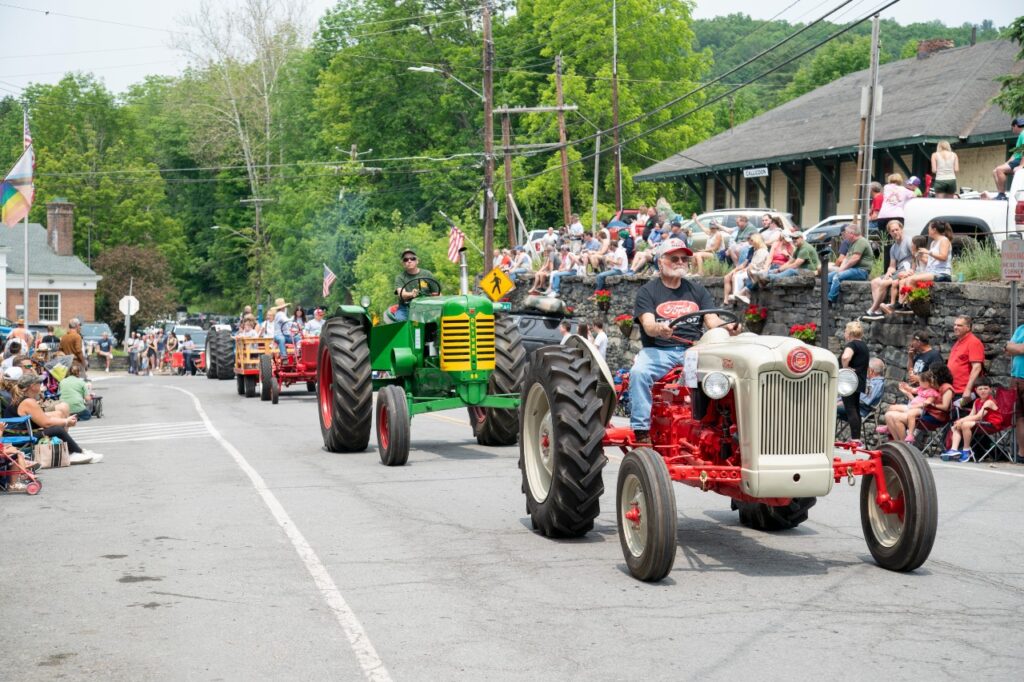
In Sullivan County, that looks like 200 tractors rumbling through Callicoon to fund the youth center. Kids running a lemonade stand for a neighbor who’s sick. Rotarians flipping pancakes at dawn to buy a book vending machine for the middle school.
Here, helping out isn’t something you put on the calendar. It’s just woven into how people live. Community celebrations throw a good party, sure, but they also raise scholarship money, stock food pantries and fund free libraries. Beautification projects happen because someone decides something needs doing and then does it.
Why Every Catskills Parade Has a Purpose
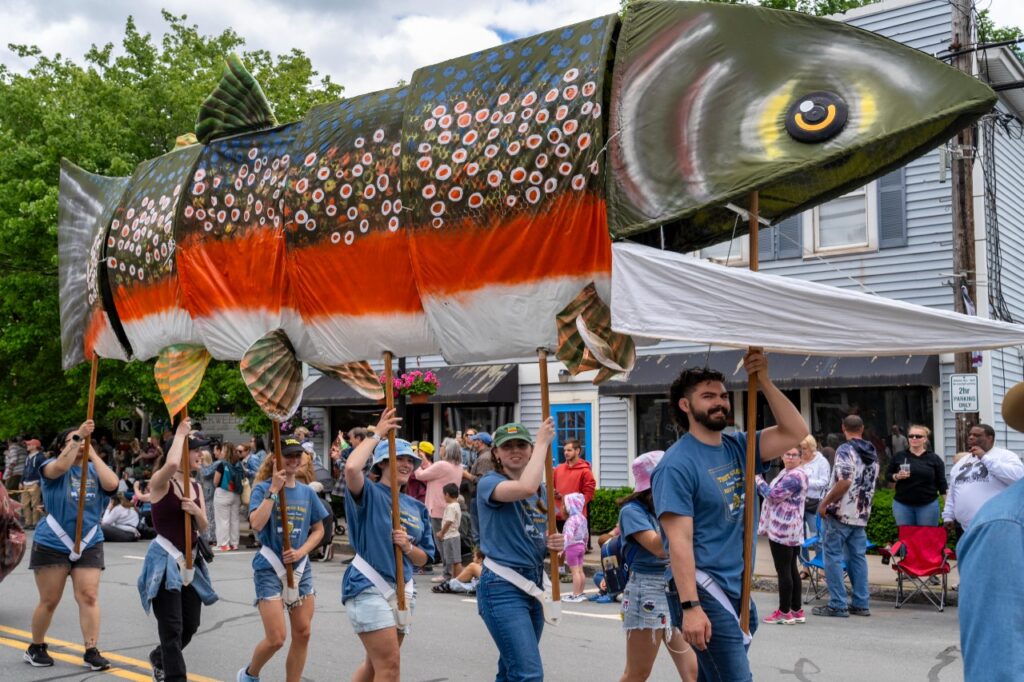
Take the Livingston Manor Trout Parade, celebrating 20 years of trout-inspired goofiness next summer. Trout on the Range. Trouter Space. Saturday Trout Fever.
Every year, it raises money to address food insecurity and boost the local school’s music program.
In Callicoon, the Tractor Parade has been running 200 Deeres and others through town for over 30 years. All tractors need working brakes. No rules against charity bake sales or car washes, though.
After the parade, everyone heads to the Delaware Youth Center for a picnic and raffle. All proceeds support youth programming. Pre-order your lunch ticket and t-shirt if you want either. They sell out.
Whether it’s 15,000 people at Monticello’s Bagel Festival or a few dozen tossing bean bags at the VFW cornhole tournament, everything raises money for something.
People share things here. Not because they have to. Because they want to.
Back in 1969, when food and water ran short at Woodstock, Max Yasgur hung a huge “Free Water” sign on his barn and handed out milk, cheese and butter.
“How can anyone ask for money for water?” he said.
The Kind of Thing That Gets Passed Down
That spirit has carried over for generations, says Audrey Garro, who moved here 25 years ago to fundraise for Bethel Woods Center for the Arts. It’s on Yasgur’s historic farm now.
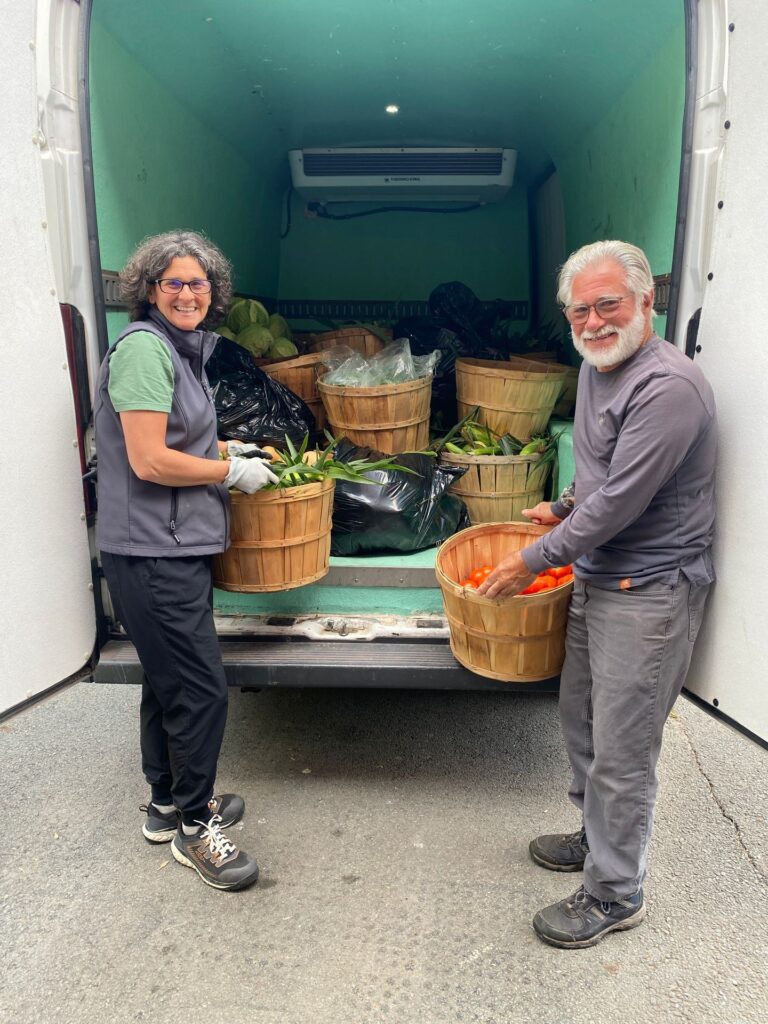
“This is a place that needs to help itself,” says Audrey, Executive Director for A Single Bite, a nonprofit solving food insecurity in the county.
“Sullivan County is very large geographically. We have a tourism economy, but it’s quite rural with little economic opportunity. People work incredibly hard to get by, but they also do everything they can to help their neighbors. Altruism and engagement are on another level. That’s because it’s learned at a young age.”
A Single Bite runs family meal and food distribution programs. They also provide real food education to 100% of 7th graders in Sullivan County. It’s working.
“We’ve had families come into the Food Hub and say, ‘we heard you needed help peeling some squash,'” Audrey says. “They stay for hours. By giving their time, they make a huge difference in the lives of other families. It’s not transactional. Everyone gains by caring for each other.”
Why People Stay (and Why They Come Back)
Generations of families live in the Sullivan Catskills for quality of life. Generations more visit to share in that experience.
This is a place that understands the genuine value in caring for a place, its communities, and people. Regardless of where your mail is delivered.
People work the fields. Chefs prepare the food. Restaurant dishes get cleaned and hotel rooms flip and then flip again.
“Each person who lives and works here shares a quality of life that’s directly reflected in the visitor experience,” says Audrey. “We do it because we love it. We know that by sharing the place we love, it gifts a sense of stewardship that will be given back.”
Why Elsie Stopped Going Back to New Jersey
It will also be shared with others. Elsie Kopcha can attest to that.
Her husband’s grandparents owned property in Liberty dating back to the 1940s. As a native of New Jersey, visiting and experiencing the quality of life here was a gift she knew she’d reciprocate with interest.
Starting in the early 1990s, trips to the area lasted longer and became more frequent until retirement in 2020 reversed the travel direction entirely.
“Now we go to the city for hockey games and Bethel Woods for concerts,” says Elsie, who volunteers for the arts center and spends time lending a hand at A Single Bite, Fort Delaware, Cornell Cooperative Extension’s Community Cupboard, Sullivan County Historical Society and Museum. She’s also a member of the Liberty Rotary Club.
“The thing that has always stuck with me is I’ve never felt like I wasn’t a part of this community,” she says. “Even when we were just part-timers, I felt connected. It didn’t take long before I was involved in a little bit of everything. Organizations like A Single Bite are a beacon of hope. There’s a caring web of people always looking to do more, and to do more, you need a lot of people in your web.”
A Pig Named Arthur Changes Everything
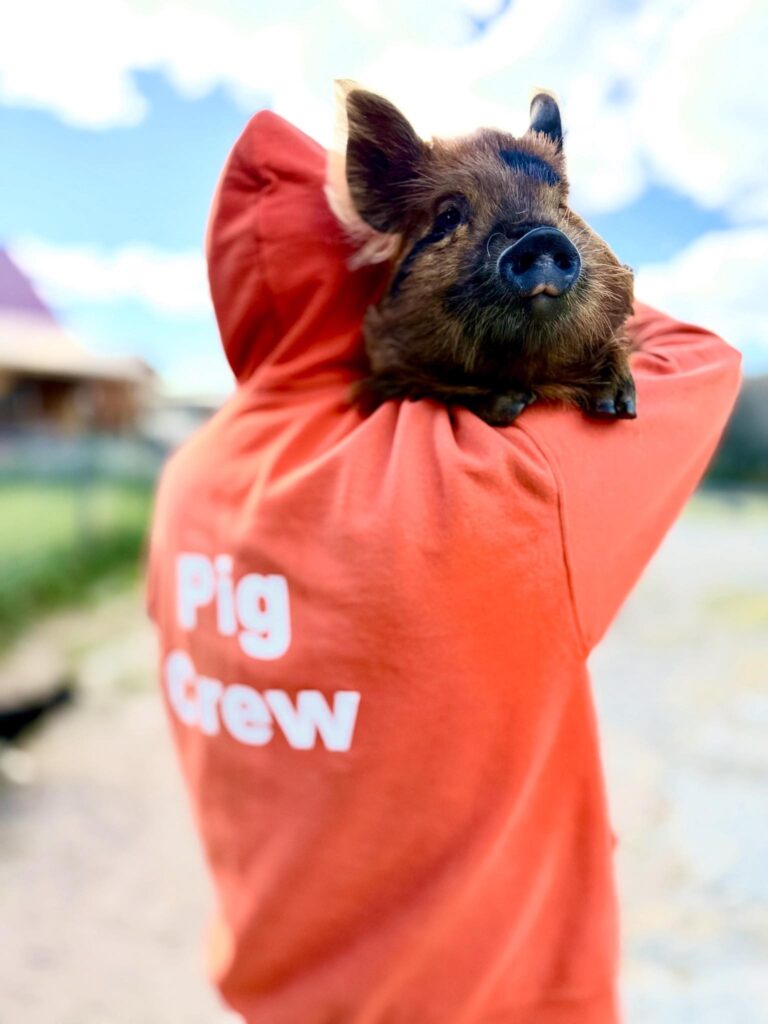
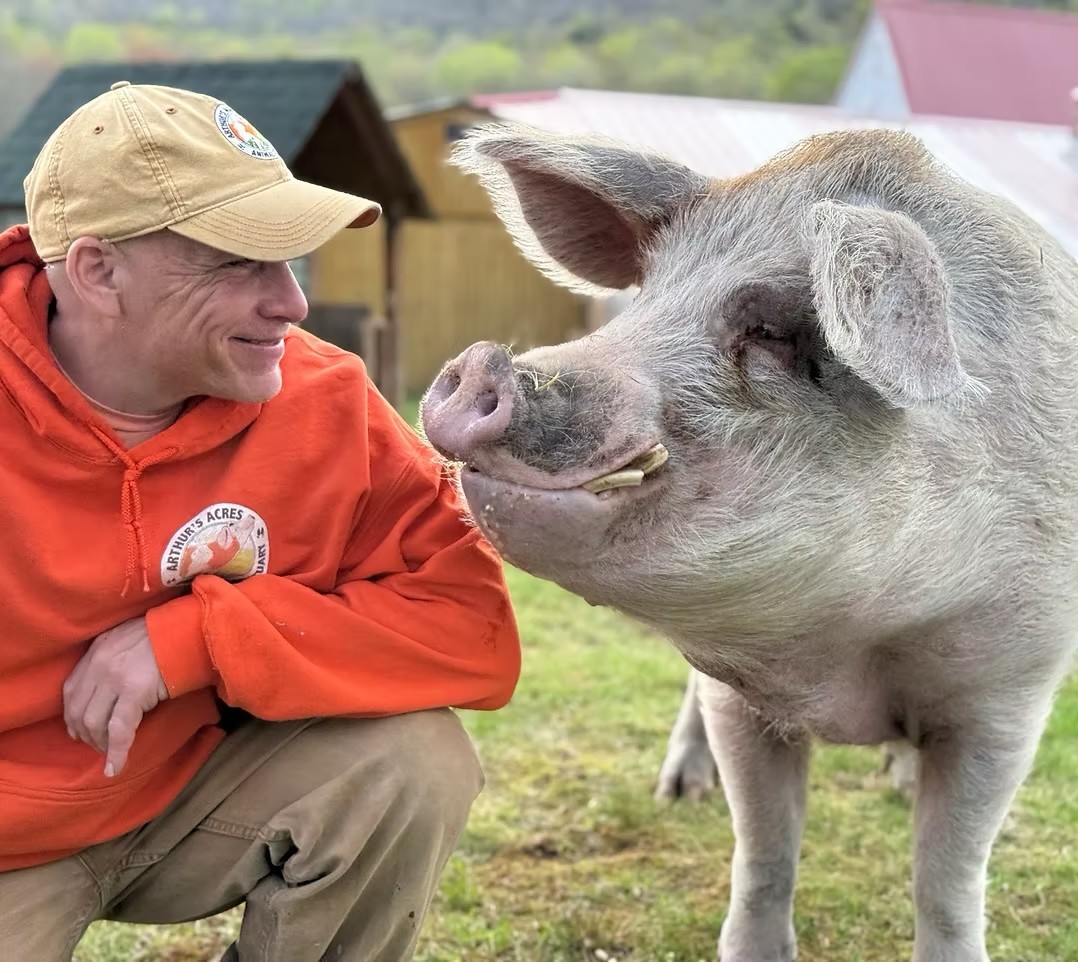
The only native at Arthur’s Acres Animal Sanctuary in Parksville may very well be Arthur himself.
When Todd Friedman was looking to start an animal sanctuary, he toured an abandoned farm where livestock had been raised to slaughter. There, in a locked pen without food or water, was a tiny piglet with a big heart.
“He came right to me, looking me in the face as if to ask my intentions,” recalls Todd.
Today, Arthur’s family is made up of over 40 pigs, 15 chickens, nine cats and dogs and a big bullfrog. He and his siblings have over half a million followers on social media and communicate their love by making connections with people throughout the world.
Some simply donate online. Others travel to the farm to visit and volunteer.
“We’ve had people fly in from Washington State for a volunteer day. A woman whose flight was canceled drove all the way from Florida to make a tour she scheduled. A guy brought me a hat from Scotland,” says Todd, whose regular volunteer list is over 150.
“Each of the animals has a story and a personality. They play, they get sad, they surprise you. They know how to make a true connection with each other and with people. Lives change after visiting Arthur’s Acres, and it’s the animals who are making that change happen.”
Lemonade Stands & Pancake Breakfasts
For Audrey, Elsie and Todd, loving a place means giving back.
It’s a culture of care that exists in other places too, but here? People always do a bit more for each other.
Sure, it happens on holidays and during events like December’s Giving Tuesday. But it also pops up on random summer afternoons when the kids in Audrey’s neighborhood decide to open a lemonade stand to raise money for a neighbor who fell into some health trouble.
It’s whipped into hundreds of pancakes flipped and served up by Elsie and the Liberty Rotarians at the firehouse to buy a book vending machine for the local middle school. Tokens earned for good character are the only currency accepted.
It’s a snouty snuggle and selfless smile from Arthur and his buddies at the acres. It’s conversations that start at parades and continue over pickleball.
“It’s honestly about making memories,” adds Audrey. “Every interaction I have with a family helps grow something with another family and so on down the line. We all benefit from each other.”
And that’s a good thing.