
When Is the Best Time to Visit the Sullivan Catskills?
If you are planning a trip to Sullivan County, New York and wondering when to go, here is what you need to know.
The Sullivan Catskills is a four-season destination. The honest answer is that there is no single best time to visit because each season offers something genuinely different. Summer brings the fullest calendar of events, river trips and outdoor activity. Fall delivers some of the best foliage in New York State. Winter is quiet and restorative. Spring opens the rivers and the trails before the crowds arrive. What matters most is matching the season to what you want to do.
Quick Answer: When Is the Best Time to Visit the Sullivan Catskills?
Each season in the Sullivan Catskills has distinct strengths:
- Summer (June through August): best for river trips, hiking, Bethel Woods concerts, free festivals, farm stands and the fullest events calendar
- Fall (September through November): best for fall foliage, harvest festivals, scenic drives and uncrowded hiking with crisp air
- Winter (December through March): best for cozy inns, fireside dining, snowshoeing and a slower, more intimate version of the county
- Spring (April through May): best for fly fishing, waterfall hikes, wildflowers and lighter crowds before summer prices kick in
Summer: June through August
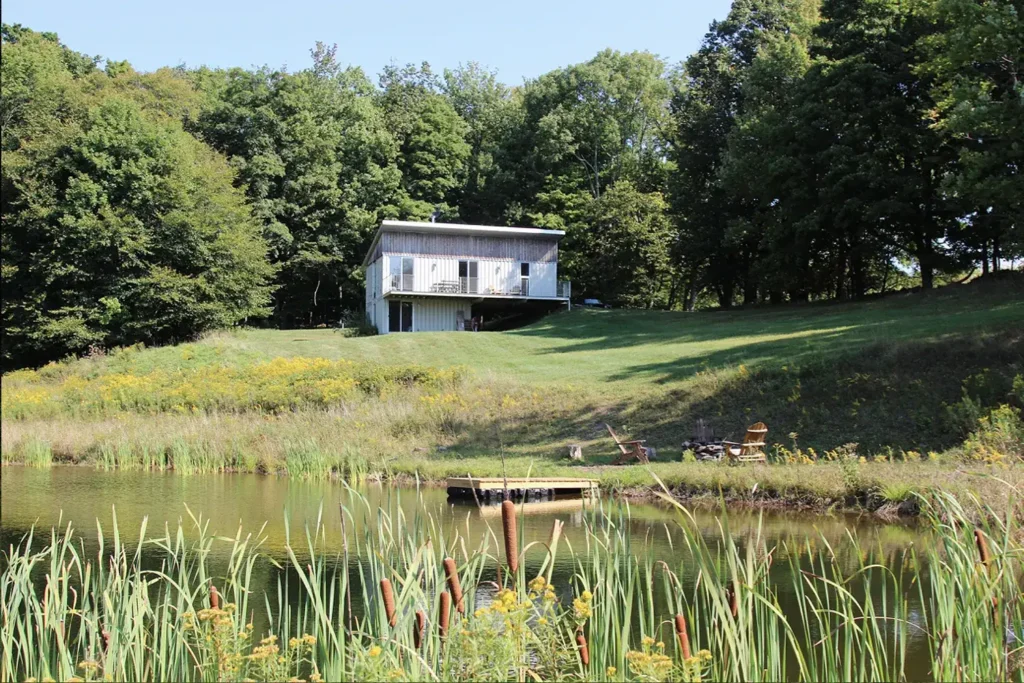
Summer is the peak season in the Sullivan Catskills and the time most first-time visitors choose. The events calendar is at its fullest, every river outfitter is running daily and the long warm days are made for being outside. Bethel Woods Center for the Arts runs major concerts weekly from late May through September. Free community festivals run nearly every weekend in July and August.
- Delaware River rafting, tubing and kayaking at its best: water levels and temperatures are ideal from June through early September
- Bethel Woods Pavilion Season: major touring acts from Darius Rucker to Billy Strings to Willie Nelson through summer 2026
- Free festivals: Livingston Manor Trout Parade (June), Callicoon Tractor Parade (June), Narrowsburg RiverFest (July), Monticello Bagel Festival (August), Grahamsville Little World’s Fair (August)
- Farmers markets: Callicoon, Narrowsburg and Rock Hill markets are in full swing
- Hiking trails: dry and accessible, with waterfalls running well into summer
- Peak prices and advance booking required: popular boutique inns and Bethel Woods concerts sell out weeks ahead
Fall: September through November
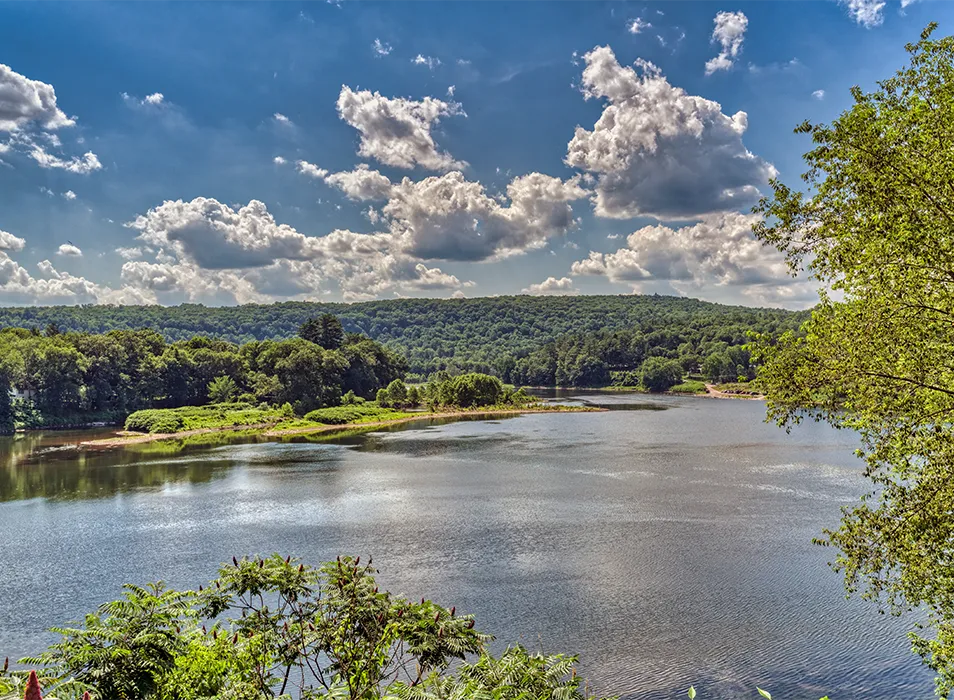
Fall is arguably the most visually spectacular time to visit the Sullivan Catskills. The hardwood forests across the county turn in late September and peak in early to mid-October. Sugar maples, oaks and birches create a rolling patchwork of red, orange and gold across the ridgelines and valleys. Route 97 along the Delaware River and the scenic roads around Livingston Manor and Roscoe are among the best foliage drives in New York State.
- Peak foliage: late September through mid-October, with early October typically the most vibrant
- Scenic drives: Route 97 through the Hawk’s Nest above the Delaware River gorge, the back roads between Livingston Manor and Callicoon
- Fire tower hikes: Red Hill Fire Tower near Grahamsville and Balsam Lake Mountain offer panoramic foliage views at elevation
- Harvest festivals and cider: Seminary Hill Orchard in Callicoon and farm stands across the county
- Big Eddy Film Festival (September) and In The Works in the Woods festival at the Forestburgh Playhouse (September)
- Foliage weekends book up fast: lodging fills weeks ahead during peak October
- Post-peak fall (late October and November): fewer crowds, lower rates, quieter roads
Winter: December through March
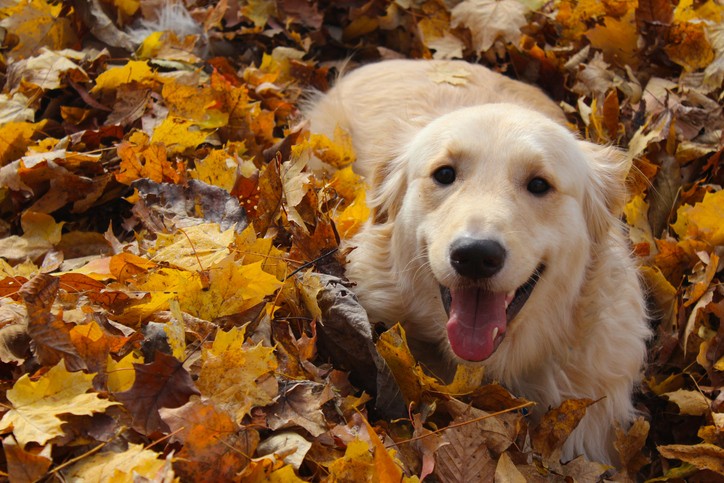
Winter in the Sullivan Catskills is quieter and more intimate than any other season. Boutique inns feel their most welcoming with fireplaces lit and smaller crowds. Restaurants that fill on summer weekends are easier to walk into. The landscape under snow is genuinely beautiful, and the county rewards visitors who slow down and lean into the season.
- Snowshoeing: trails across the county including Alder Lake, the Basha Kill and Walnut Mountain Park are excellent for winter exploration
- Cross-country skiing: the Neversink and Beaverkill valleys offer backcountry skiing and snowshoe terrain
- Downhill skiing: Holiday Mountain in Monticello offers family skiing and snow tubing about 20 minutes from Livingston Manor
- Cozy dining: The Arnold House Tavern, The DeBruce and North Branch Inn are at their most atmospheric in winter
- The Kartrite Resort: New York State’s largest indoor water park stays at 82 degrees year-round and is an excellent winter family option
- Lower lodging rates: many properties offer reduced pricing in winter, sometimes significantly below summer rates
- Some seasonal businesses close or reduce hours from December through March: check ahead before making a special trip
Spring: April through May
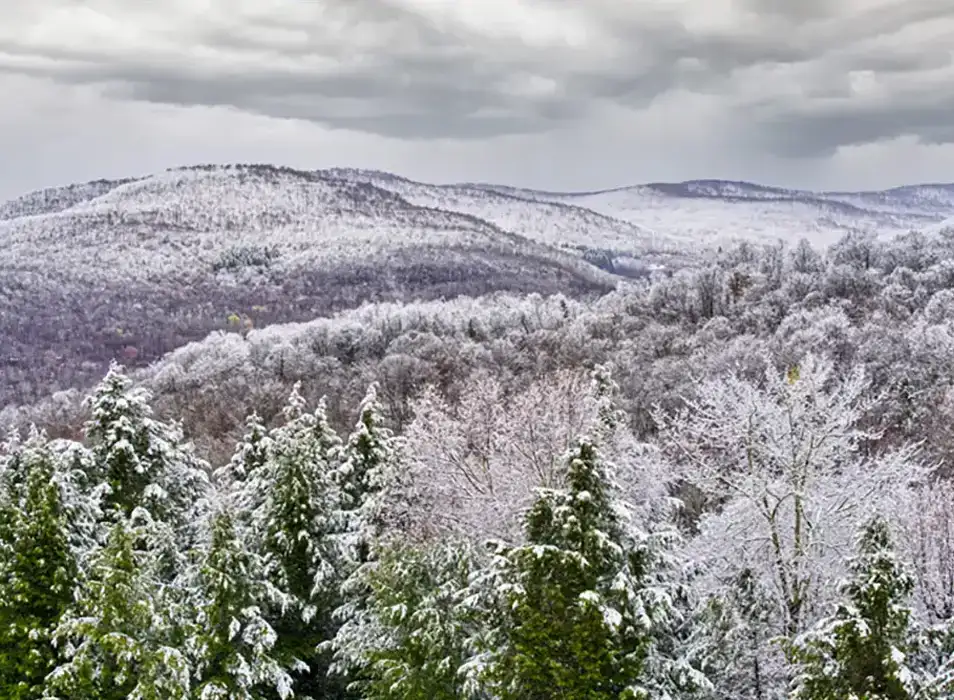
Spring is the Sullivan Catskills’ best-kept seasonal secret. The crowds have not arrived yet. Prices are lower. The rivers are running high and fast from snowmelt, making it the best season for serious fly fishing on the Beaverkill and Willowemoc. Wildflowers bloom along the hiking trails. The county’s creative community comes back to life as seasonal businesses reopen for the year.
- Fly fishing: spring is prime season on the Beaverkill and Willowemoc rivers, the most celebrated trout streams in the country
- Waterfall hikes: Russell Brook Falls and the Neversink waterfalls run at their most powerful in spring
- Wildflowers: trillium, trout lilies and wild violets bloom along the hiking trails from late April through May
- Birding: the Basha Kill Wetlands and surrounding forests are exceptional for spring migration, with warblers, tanagers and other species passing through
- Lower prices and lighter crowds: most summer and fall visitors have not yet arrived, making spring ideal for last-minute trips
- Black flies: late May brings black flies on wooded trails; bring insect repellent for forest hiking
- Some trails run muddy: snowmelt keeps lower-elevation trails soft through mid-April
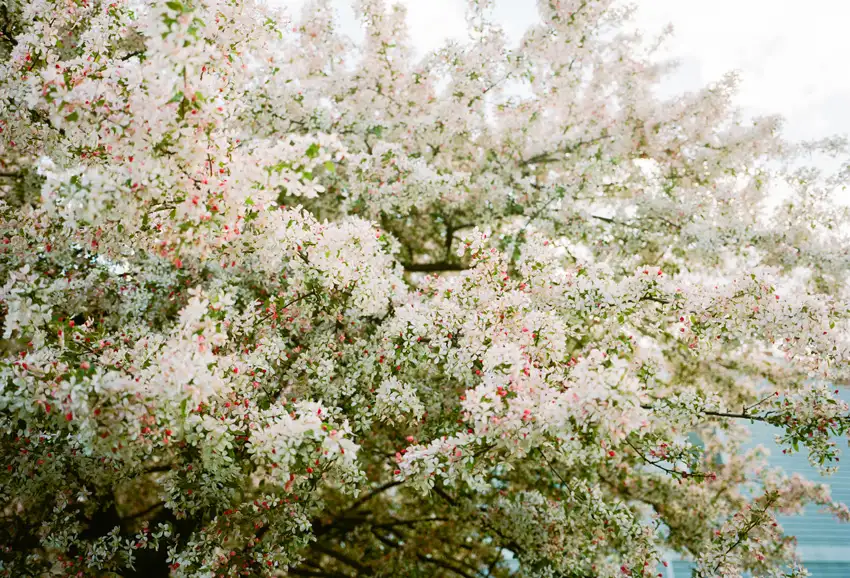
Crowd and Price Levels by Season
Knowing when to expect crowds and higher prices helps with planning, especially for those who prefer a quieter experience.
- Peak season (highest prices, most advance booking required): July, August, early October
- Shoulder season (good balance of activity and availability): June, September, late October
- Off-season (quietest, lowest prices, some closures): November through March
- Value season with growing activity: April and May
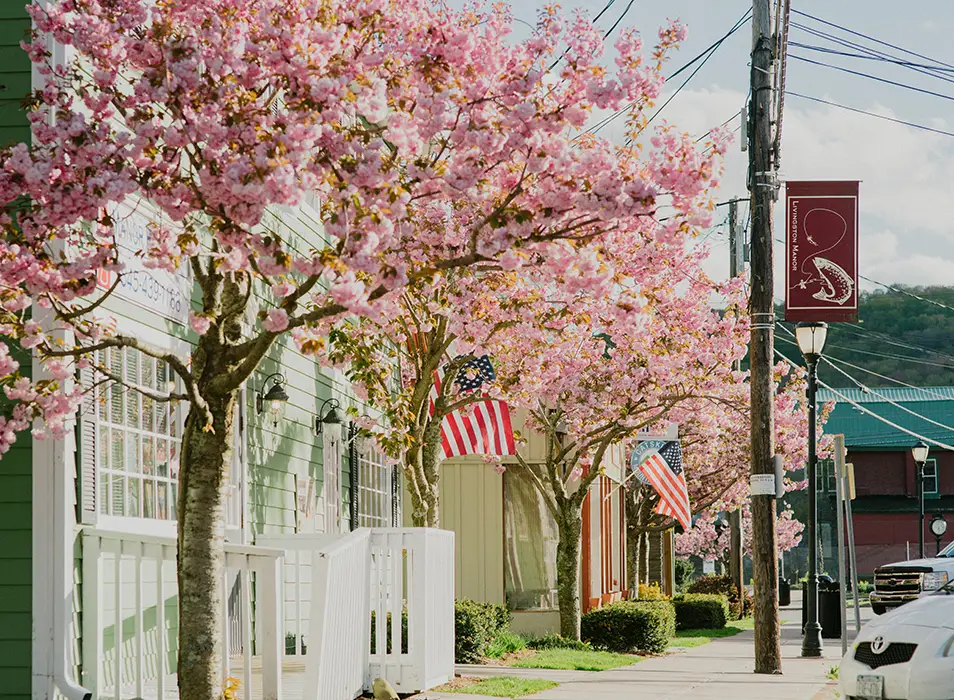
What to Do in Each Season
Summer: Delaware River trips, hiking, Bethel Woods concerts, free festivals, farm stands, farmers markets, outdoor dining, the Kartrite water park, Forestburgh Playhouse theatre season.
Fall: Foliage drives, fire tower hikes, harvest festivals, apple picking, cider tasting, the Big Eddy Film Festival, scenic Route 97 drives, farm stands at peak harvest.
Winter: Snowshoeing, cross-country skiing, downhill skiing at Holiday Mountain, fireside dining, the Kartrite water park, cozy inn stays, HPAC cinema and events.
Spring: Fly fishing on the Beaverkill and Willowemoc, waterfall hikes, wildflower walks, birding at the Basha Kill Wetlands, farmers markets reopening, lighter crowds.

Frequently Asked Questions
Is two days enough for the Sullivan Catskills?
Yes. Two days is enough for a very good introduction to the region if you focus on a few high-quality experiences rather than trying to see everything.
What should I prioritize on a first trip?
For a first visit, prioritize a great place to stay, one outdoor or scenic experience, one small-town or cultural stop, and strong local dining. That combination best reflects how the destination is presented across its stay, play, and eat content.
Is the Sullivan Catskills better for adventure or relaxation?
It works well for both. The region promotes hiking, farms, arts, history, food, entertainment, and slower getaway experiences, so you can build a more active or more restorative weekend.
Should I plan every hour in advance?
No. A better approach is to plan a framework: where you are staying, one or two anchor activities, and a few food or town options. The destination is especially good for discovering things between the scheduled moments.
What makes the Sullivan Catskills different from a generic Catskills weekend?
The Sullivan Catskills stands out for its blend of scenic outdoors, local food and drink, arts and culture, destination lodging, and approachable small-town character, all within a region intentionally marketed for trip planning and weekend escapes.
If you want, I can next turn this into a fully polished on-brand webpage in Sullivan Catskills’ voice rather than just matching the Word doc structure.
SUBSCRIBE TO OUR BLOG
Make time for what matters.
Your getaway, made easy.
Build My Dream ItinerarySubscribe to the Sullivan Catskills.