
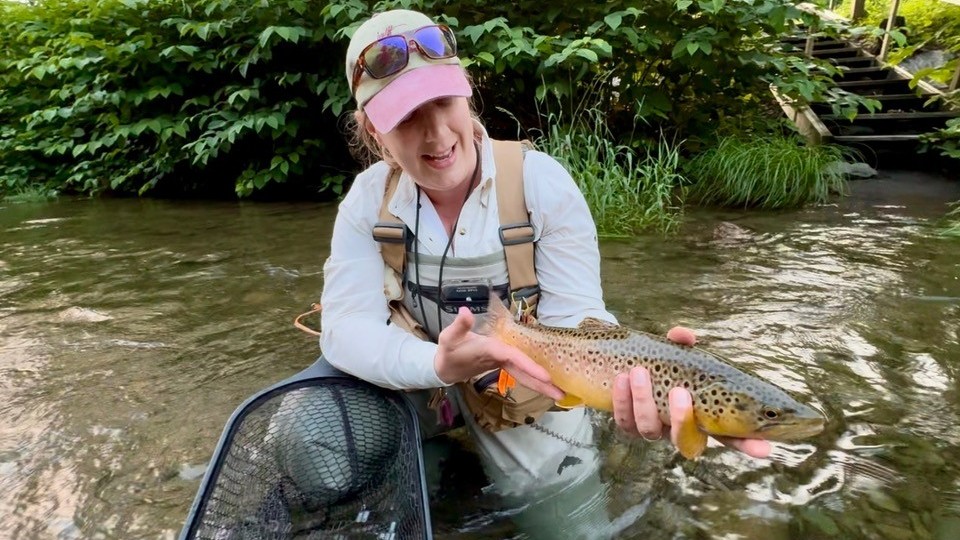
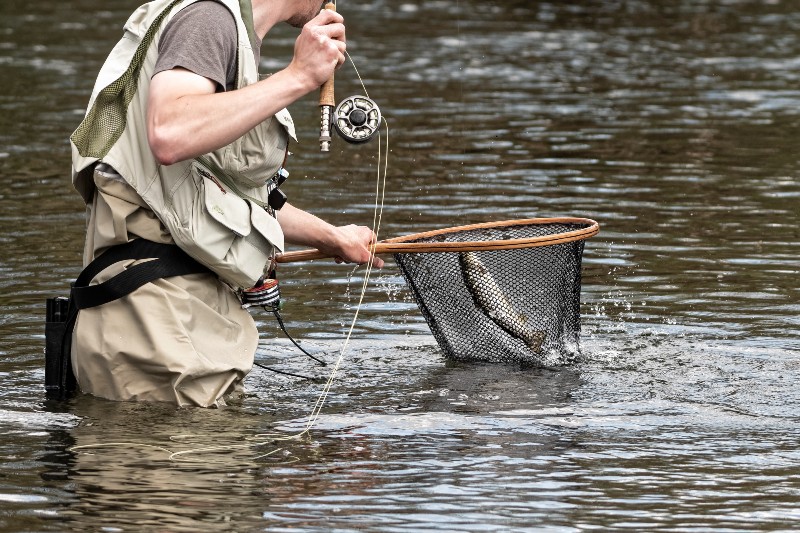
There’s something special about a perfect cast. The beauty of an artfully tied fly as it arcs softly above the riffles, drops, then floats dead drift downstream. The joy and anticipation of fooling a fish through a symphony practiced and perfected over time.
Maybe it’s the motion. Maybe it’s the place.
A cool misty morning. A sepia evening of alpenglow. The sound of water bubbling over limestone rocks. Birds fluttering in and out of rich hemlocks. Everyone enjoying the hatch and pretending to be the only one there.
Maybe it’s all those things knitted naturally into a history of a landscape shaped by the art of fishing. None of it quite like the Sullivan Catskills.
“Sometimes fooling a fish completely makes my day. Other times, the fish fool me. Both keep me coming back to the water. It’s about being out there.”
— Brian Comfort, Beaverkill Angler, Owner
A Legacy of Fish in the Sullivan Catskills
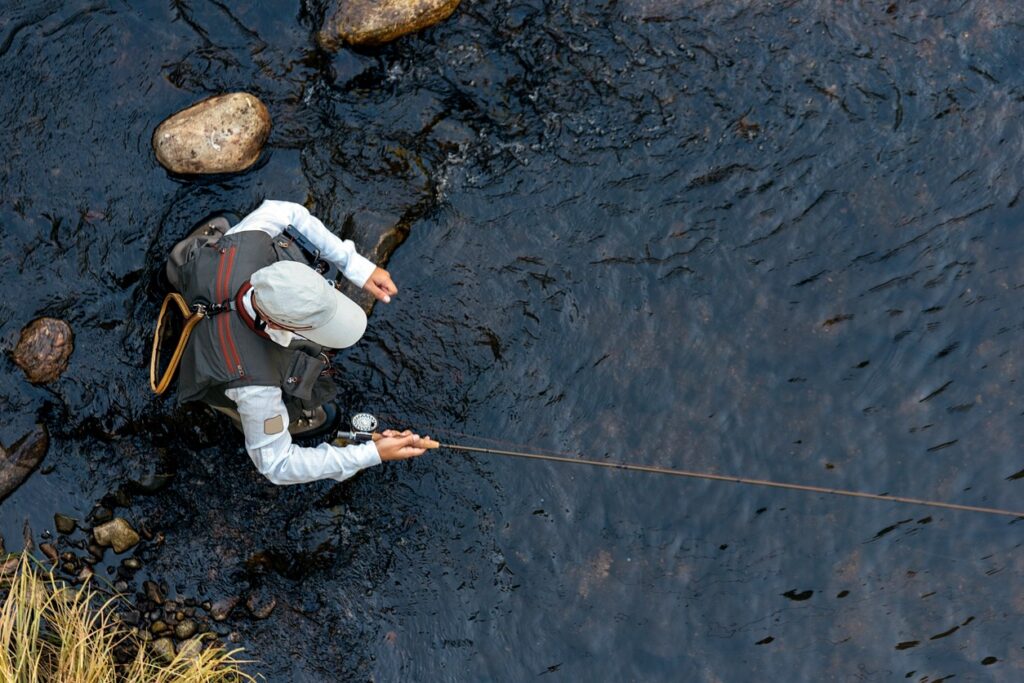
This is the kind of place that inspires poetry and prose. Some shared in conversations over generations. Others penned into the lore of a good book, Trout Fishing in the Catskills being one of them. This is, after all, where dry fly fishing was born from the curiosity of one Theodore Gordon, author of The Complete Fly Fisherman.
Today, the waters still whisper through real communities shaped by rivers and calloused hands. Towns like Liberty, Livingston Manor, Callicoon and Neversink. Roscoe, where the Beaverkill and Willowemoc rivers meet in a place now famously called Trout Town, USA.
“Time flies so fast after youth is past that we cannot accomplish one half the many things we have in mind or indeed one half our duties. The only safe and sensible plan is to make other things give way to the essentials, and the first of these is fly fishing.”
— Theodore Gordon
The Rivers
Beaverkill
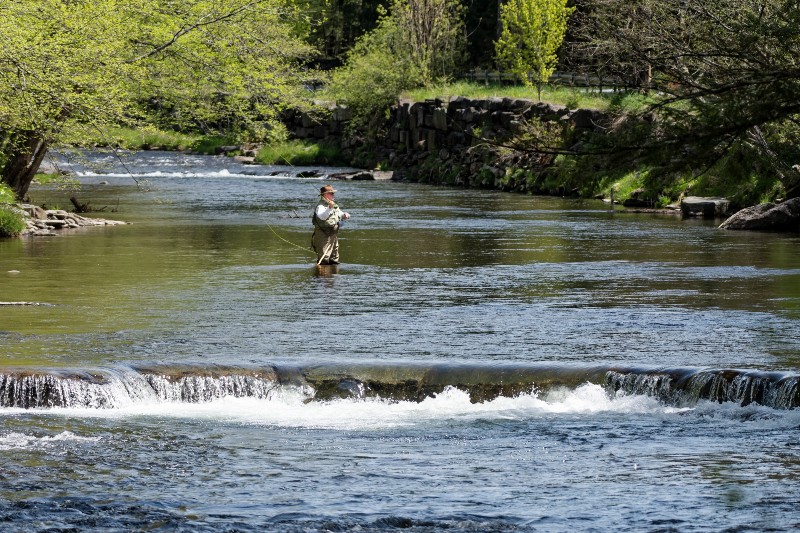
Considered the birthplace of American fly fishing, the Beaverkill is one of the country’s most beloved trout streams. Born of mountain springs and feeder streams, it tumbles over rocks and gravel to form deep, cool and unforgiving pools that challenge and reward.
Willowemoc
A tributary of the Beaverkill, the Willowemoc is the area’s most charming trout stream with an unmatched variety of water. Its intimate spaces, crystal clear pools and less rugged topography make it perfect for early season wading.
Delaware – East Branch
The East Branch, also known as the Upper Delaware, ranks among the most challenging rivers in the watershed to fish. Not because of its flows or terrain, but because of the access. There simply isn’t much of it. Which means there’s a lot of room to cast for wild rainbows.
Delaware – West Branch
This westerly brother is where big water and big fish hang out together. Wading is possible, but the preferred method for trophy browns is fishing from a guided boat. In summer months, the water level drops significantly but stays surprisingly crisp and cold.
Deciding which one to fish depends on the time of year, time of day, temperature of the air, whether it rained the day before, what’s hatching and a myriad of other factors that a local outfitter or guide could rattle off with an ease and casual flow similar to the water they’re describing.
“I fell in love with fishing when I caught a rainbow trout on the Upper Delaware. After releasing the fish, I knew I had to spend the rest of my life in this place doing just that.”
— Laura Colangelo, Catskill Fly Fishing Center & Museum, Director of Operations
What’s Hatching & When
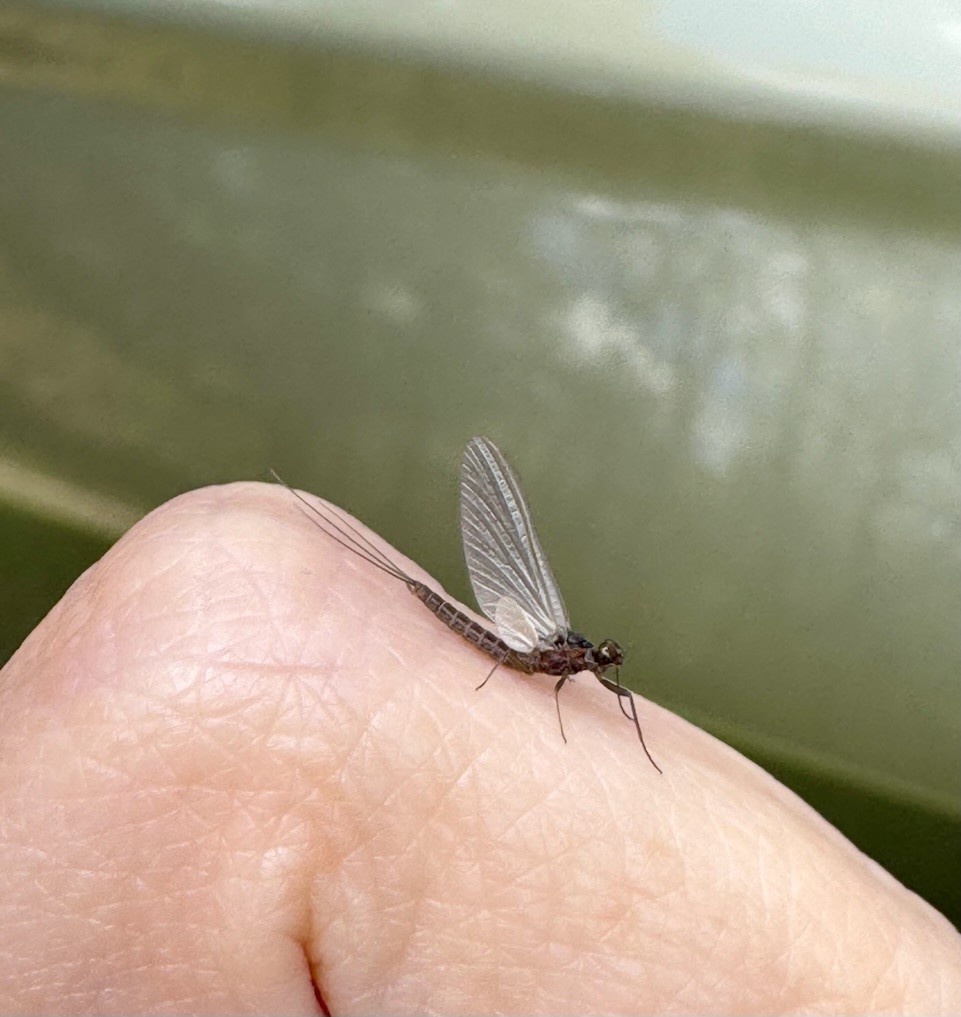
Spring
Each river runs its own adventure, shifting with the seasons. Spring fishing on the smaller streams, like the Beaverkill and Willowemoc, gives anglers the first chances at seeing Mayflies hatch and hungry trout eating “on top.” These rivers warm up sooner than the larger rivers, namely the East and West branches of the Delaware.
Spring Flies
- Quill Gordons
- Blue Quills
- Hendricksons
- March Browns
Summer
Warm summer months move slow on the freestones* as the water runs too warm and sometimes too low to safely catch-and-release trout. Most anglers head to the tailwaters, such as the East and West Branch of the Delaware and the Neversink, where dam releases keep the water cooler.
Summer Flies
- Sulphurs
- Blue Wing Olives
- Isonychia
Fall
Autumn in the Sullivan Catskills is reason enough to visit. Vibrant leaves, crisp air, warm drinks and hearty meals. And the fishing holds strong with most rivers holding Browns, Rainbows and Brookies. Look for them to hang out in the warmer river sections, above dams as well as the main stems, munching on summer insects still hanging around, like Blue Wing Olives and Isonychia.
Fall Flies
- Blue Winged Olives
- Isonychia
- Pheasant Tails
- Hare’s Ears
- Wooly Buggers
- Zonkers
*Freestone (noun): a stone that may be cut freely without splitting, such as limestone and sandstone.
Gearing Up
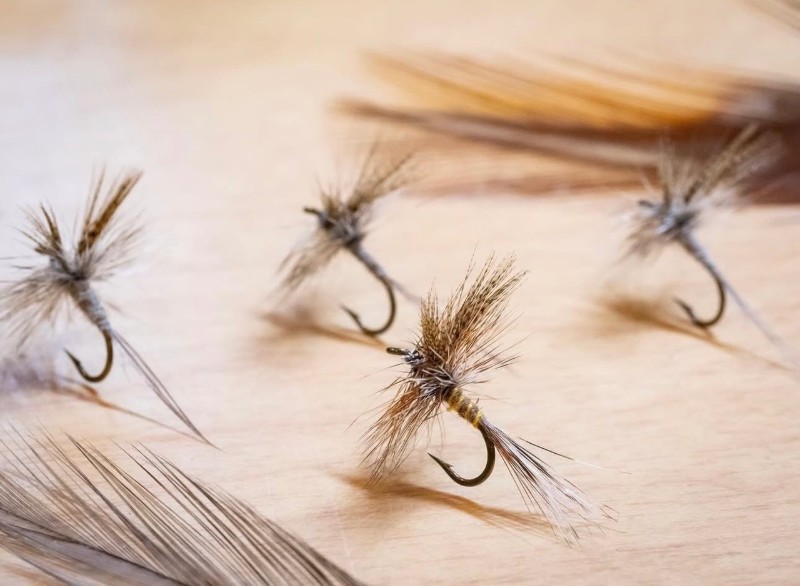
Of course, the one nearly foolproof way to know what’s hatching and where the fish are hiding is to connect with a local outfitter or guide. For them, fishing is a lifestyle first, job second. They simply love these waters and the natural beauty that surrounds them.
They’ll also make sure you’re properly outfitted for the places they recommend and, if you’re not, they’ve got what you need.
Essentials Checklist
- Inspect and clean your rod and reel
- Check and replace fly lines
- Organize and refresh your fly box
- Check waders and boots (a leak or busted lace will ruin a day in a hurry)
- Organize essential and comfort items
- Vests, slings, and packs
- Tools
- Apparel and sun protection
- First Aid
Pick a river town and there’s a professional fly shop, many of which have been helping people enjoy and learn about Catskill waters for decades. Dette Flies in Livingston Manor, for example, was founded by Walt and Winnie Dette in 1928 and has stayed in the family ever since.
Catskill Flies, Beaverkill Angler, Trout Town Adventures, Baxter House Outfitters and Trout Town Flies in Roscoe can also point you in the right direction and set you up with gear, a guide and a fish joke or two.
And whether you’re fishing or not, no visit to the area is complete without a stop at the Catskill Fly Fishing Center and Museum in Livingston Manor, which sits on a stunning 53-acre campus along the storied Willowemoc where Theodore Gordon tested his first flies. Its lush, forested grounds include casting fields, trails, a covered pavilion, and access to the river.
Locals’ Tip: If it’s been a while since you’ve cast a line, spend some time in the yard practicing before you get to the river. It’s better to shake off the rust before you try not to scare the fish or your friends.
Après Angling
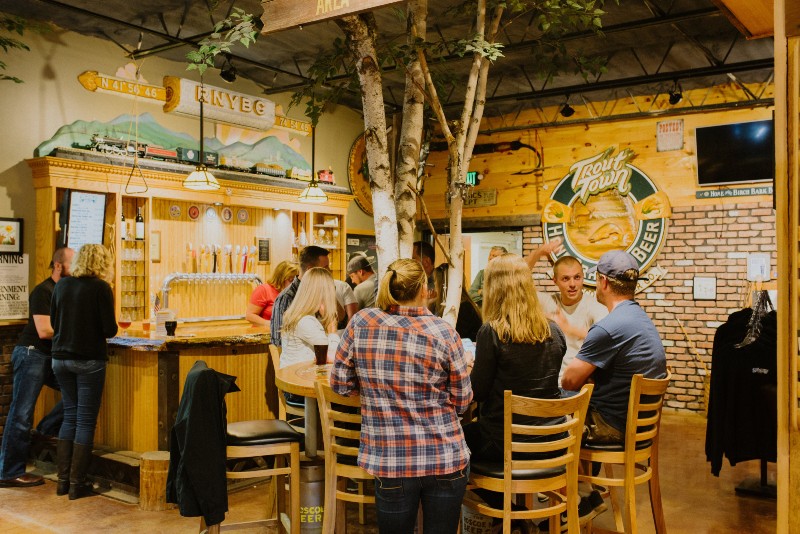
As dusk settles in and the soft clack of rolling river rocks transitions to similar pangs in your belly, take one last mental photo and head out. As Laura Colangelo says, trout do not live in ugly places. Where you go from here is part of the experience too.
Raise a Glass
Tailgate beers are tasty, but nothing quite beats a freshly poured craft draft after a day on the water. A few worth seeking out:
- Roscoe Beer Company — Trout Town Amber, Pilsner or Riff Session
- Callicoon Brewing & Catskill Brewery — some of the finest seasonals you’ll find anywhere
- Upward Brewing, Livingston Manor — pours the “Fishin’ Buddy” Willowemoc Lager during its annual Trout Parade
Pull Up a Chair
Wearing waders to dinner is common practice and perfectly acceptable in the Catskills. Saddle up to a hardwood bar or stretch out on a comfortable patio for farm-fresh fare. Chances are there’s a band playing, kids playing giant Jenga and a puppy or two wandering around in search of a friendly scratch.
The Best Part of the Day
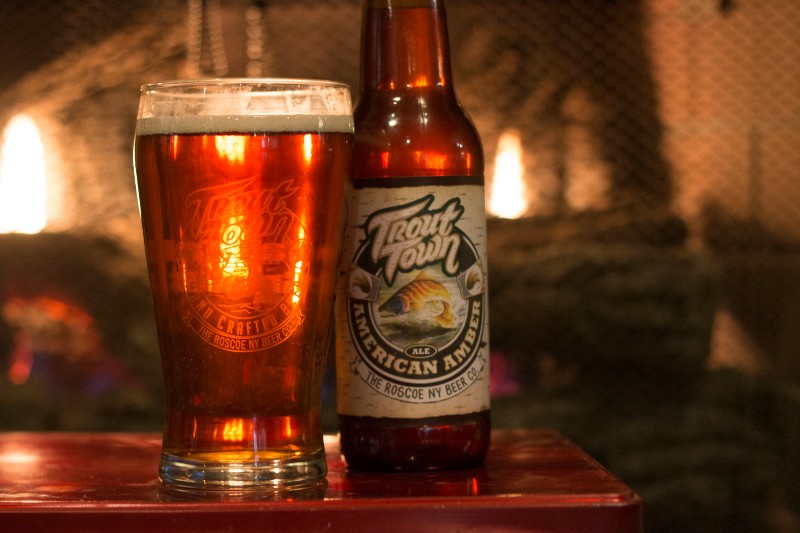
One of those pups may be Brian Comfort’s. He says there’s nothing quite as satisfying as a tasty beer and juicy burger after a day on the water, whether the fish were biting or not.
“There’s a lot of joy in reliving things with folks who fished other places and had their own experience on the river. A good story and a lot of laughter is all I need to cap a great day.”
— Brian Comfort, Beaverkill Angler, Owner
After all, very little of what people enjoy most about fishing is catching a fish.