








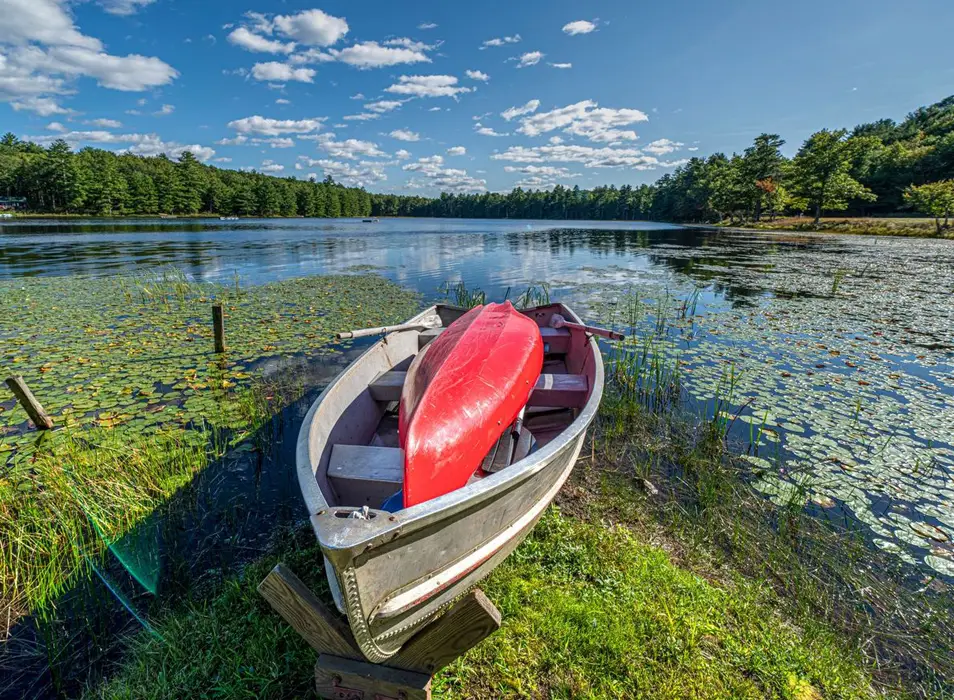
Fall foliage surrounds water in the Catskills with wildflowers in the foreground.

How to Photograph Fall in the Sullivan Catskills

Of all the reasons to indulge your senses by exploring Sullivan County in autumn— the scent of woodsmoke by a lodge fire, the feel of crisp air as you hike any of the dozens of trails, the taste of apple cider at a local orchard—let’s face it: The sight of our Catskills mountains and valleys erupting in reds, oranges and yellows tops them all.

So, it only makes sense that you’d want to photograph our fall foliage in all its technicolor glory, capturing a one-of-a-kind souvenir suitable for framing.

But there’s often a big gap between the kind of picture-perfect shot you see in art galleries (and even with your own eyes) and what you get with your camera.

With help from two veteran Catskills shooters, White Lake-based Michael Bloom and South Fallsburg resident Jerry Cohen, we’ve compiled a list of literal pro tips to take your photo game to new heights. From technical advice suitable for even rank novices to great places to train your lens, read on for some inside info on making this fall one to remember.

1. You’ve already got the gear

A woman takes close up photos of fall foliage in the Catskills.

It’s tempting to look at a professional’s rig and think you need to splurge thousands of dollars on high-quality lenses, lighting and camera bodies to get high-quality pictures. And while great glass goes a long way in the right hands, there’s an old photography adage as true today as ever:

The best camera is the one that’s with you. And for most of us these days, that’s a cell phone.

“You can get great pictures on a cell phone,” said Cohen, an accomplished amateur who has been taking pictures for a half-century (and even spent time in a darkroom with Ansel Adams toward the end of the master’s career, and the beginning of Cohen’s own).

“You can zoom in. You can use the lighting to your advantage. If you just choose your pictures wisely in the right lighting, there’s a lot you can do. You don’t just have to have an expensive camera,” he explained.

If you’re looking for an instant upgrade though, consider a tripod. These low-tech devices allow you to shoot at longer shutter speeds, which are ideal for low-light situations or to capture motion effects such as the blur of rushing water.

2. Do your homework

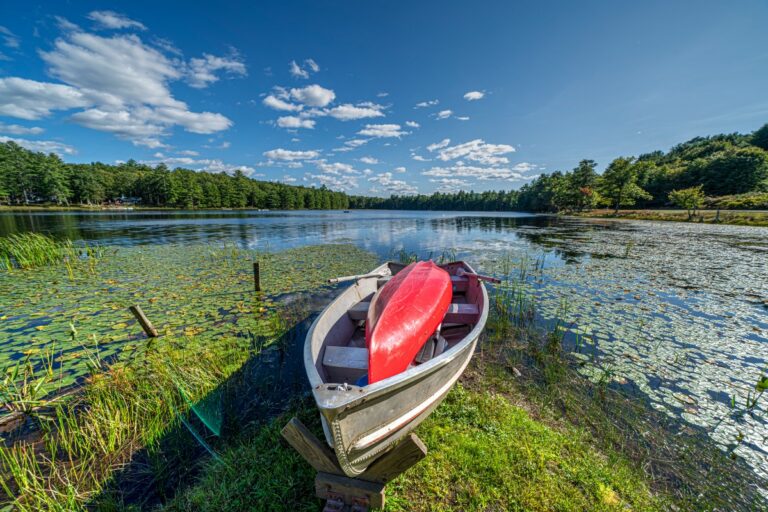
A Catskills pond surrounded by fall foliage.

There’s a chance that you could be driving on a remote road, round a corner and stumble onto a great image. It happens! You stand a better chance of success if you put some work onto the front end of your process.

As Cohen put it: “You have to put some thought into getting good pictures.”

To him, that means doing some advance scouting, then thinking through when the light is likely to be just so. “I look at the direction of the sun and think, ‘Wow, this would look fantastic in the morning. I bet that lights up like a Christmas tree.’”

Sometimes, that means leaving a photo behind in favor of coming back when the lighting is better. “It’s not always perfect,” said Cohen, whose landscape photographs burst with color. “You have to go back to places.”

Those places could be right around the corner, if not even closer: “A good photo can be made anywhere within 10 square feet, if you look hard enough,” Bloom said. “If you’re staying in the area for a few days, check the same spot out at different times of day, see when the light hits it. If that’s important to you, get there when the light’s great.”

Often, the light’s great at inconvenient times—like very early in the morning, when most vacationers would rather be in bed. That doesn’t mean you can’t get great pictures, though.

3. Be flexible

A blue heron stands near water in the Catskills with fall foliage in the background.

Bloom, a full-time professional whose craft leans more toward portraiture—he’s photographed musicians such as songwriter Natalie Merchant, guitar god Steve Vai and jazz trio Medeski Martin & Wood—tends to leave shooting more to chance. What he eschews in planning, he makes up for with years of experience. Oftentimes, one of the things experience teaches the most is when searching for a shot, sometimes your best bet is to turn around.

By changing your point of view, you might notice the light creating an image you like even more than the one you originally lined up. “Backlighting illuminates atmosphere, fog, smoke coming off of chimneys,” he said. “Don’t shoot all your photos with the sun behind you. You can break that rule, beautifully.”

Getting a new perspective can lead to interesting shots. “Show me how a mouse sees the world. Show me how a bird sees the world,” Bloom said. “Put the camera on the ground, get up on a ladder. That just freshens your photo.”

Cohen agreed. “Don’t be afraid to get up really, really close to stuff and just take pictures of color—maybe just five leaves,” he said. “It might be the best shot you ever took in your life.”

4. Get technical

A bald eagle flying through the trees in the Catskills.

Experts rarely shoot in auto mode and to get the most out of your pictures, you should experiment, too. While mirrorless cameras and digital SLRs provide ways to take extensive manual control of exposure, cell phones also offer those options.

“You can control your brightness and white balance on cell phones,” Cohen said. Just look for a mode on your camera like Manual, Pro or Professional.”

If you’re shooting at the crack of noon, when the light is brightest and harshest, underexposing your image is especially helpful, Bloom suggested.

“What happens is the bright parts of the photo just get burned out to white,” he said. “If you take the photo just a bit dark, it’s easier to bring back the shadows than it is the highlights. Embrace contrast. Expose for the bright and let your shadows go deep dark.”

For photographers like Bloom and Cohen, post-production in photo editing software is a big part of the process. “I enhance everything back to what I think I saw,” Cohen said. But he warns: don’t try over-enhancing your pictures by cranking up the saturation. Red leaves are good, but glowing red isn’t. “They’re just going to look fake, everybody’s going to know it and you’re going to end up hating it.”

5. It’s not over ‘til it’s over…and then it starts again

A trail covered in fallen leaves follows along a lake in the Catskills.

So, you’re finally ready to book your leaf-peeping getaway and you look at a foliage report only to see those two dreaded words: Past peak.

That’s no reason, though, to push your trip to next year. There are countless opportunities to make memorable images even when the colors are muted or even gone.

“I go for more individual shots of individual trees, because there’s always going to be a beautiful tree,” Cohen said. “It’s not going to be a whole mountainside of beautiful color. But if you get the right perspective in the right shot, the right light for that tree, you’re going to get a great shot. And, you know, there are leaves on the ground. Leaves in the water. There are all kinds of things.”

And once those leaves disappear? To Bloom, late fall and winter open new doors.

“With some of the leaves off, you’re getting into some of the cleanest light you can get all year,” Bloom said. Colder mornings bring the chance to shoot fog created through temperature inversions (when cooler air settles in valleys, and warmer air sits on top), and frost, and heading into winter, icicles and snow.

So don’t let the end of the season turn you away.

“You didn’t miss it!” Bloom exulted. “It’s life. It’s still happening. It’s great.”

Where to shoot

A wooden bridge covered with fallen leaves leads through a forest filled with vibrant autumn foliage in shades of red, orange, and yellow. Trees line both sides, creating a colorful, peaceful scene.

Now that you’ve charged your camera and packed the car, where to shoot? Bloom and Cohen offered some suggestions:

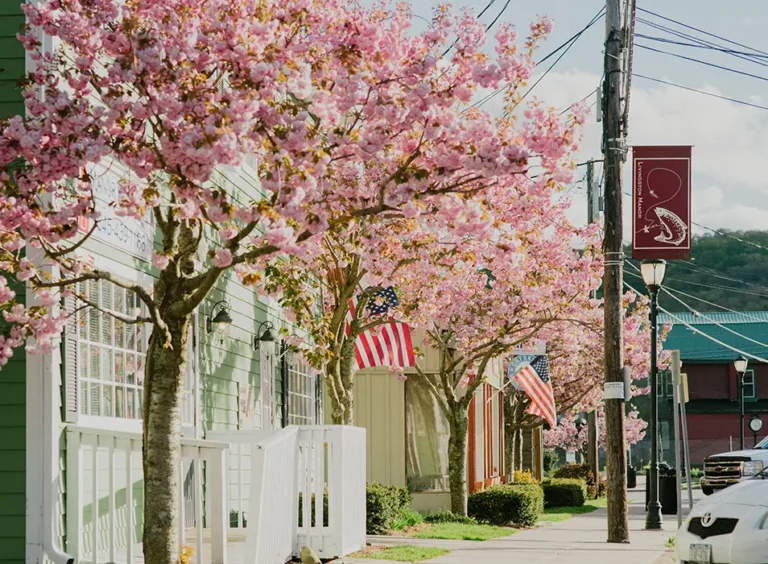
Callicoon. Both photographers put this small town near the Pennsylvania border and along the Delaware River high on their list of photogenic locations. Rich in history, close to history and blessed with an active downtown, Callicoon will keep your shutter finger working overtime.

From there, Cohen suggested driving past the Villa Roma Resort toward Jeffersonville, keeping an eye out for vistas along the way. “It’s a gorgeous, gorgeous place to go to shoot fall pictures,” he said.

Liberty. Continue driving from Jeffersonville toward Liberty, where more views await. Cohen often shoots the hillsides and valleys on these roads with a telephoto lens, focusing on individual barns or mountainsides that intrigue him rather than shooting wide-angle landscapes.

Any body of water. Cohen spends a lot of time photographing scenes from his kayak, which allows him to get a different angle on both shoreline and wildlife. “Even if you’re on land, if you’re in a good position, the reflections of trees in the lake, lakes and streams are absolutely beautiful,” he said.

Bloom agreed, urging visitors to go to reservoirs or the tributaries that feed them, or the Delaware River itself. “The Delaware is glorious,” he said. “Even when you’re not in peak fall season, from a distance, you’ll still get some color. And if the river is the focus, it doesn’t matter if you have perfect foliage.”

The night sky. You’ll need a tripod for this one to accommodate for long exposures. “This is galaxy season,” Bloom said. “With the sun setting earlier, you can get celestial photos and not have to be up until 3:30 in the morning.”

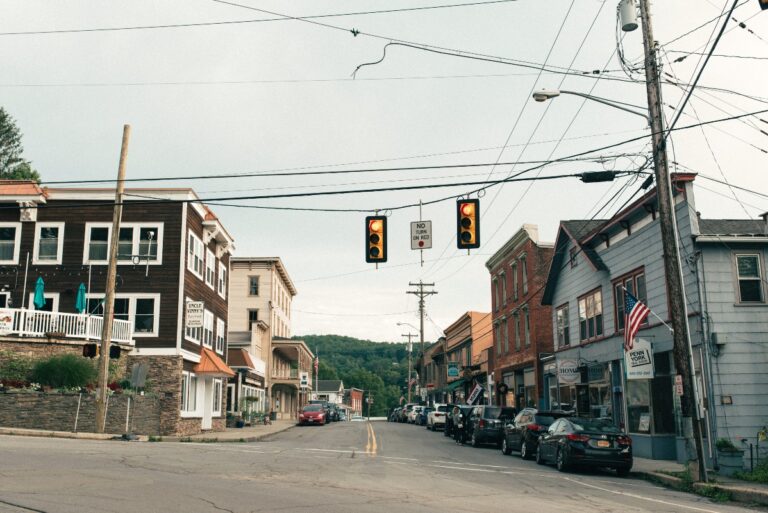
Every turn in the Sullivan Catskills offers a new frame worth capturing; sunlight filtering through maple leaves, a riverbend wrapped in gold or a quiet main street glowing at dusk. But beyond the perfect photo, it’s the experience that stays with you: breathing in the crisp air, noticing the details and feeling part of the landscape rather than just a visitor.

So, pack your camera, your curiosity and maybe a thermos of cider. Whether your shots are gallery-worthy or simply a reminder of a beautiful day, you’ll leave with something far better than a picture—you’ll leave with the memory of fall in the Catskills.


Brochure Order Form

This field is for validation purposes and should be left unchanged.
To order brochures simply select the check box next to the brochure you would like to order select the quantity and fill out the form below
Select Brochure(Required)
Address